By Victoria Woollaston
PUBLISHED: 08:51 EST, 11 December 2013 | UPDATED: 10:17 EST, 11 December 2013
Rumours began circulating last month Apple could be working on a curved phone and the firm's latest patent has added serious weight to these claims.
The patent describes the manufacture of a concave screen which can be made at high temperatures - current methods involve heating screens for longer at lower temperatures.
It is thought the technology could be used for iPads, a smartwatch with a curved screen or the rumoured upcoming range of curved 4.7-inch and 5.5-inch iPhones.
 OTHER CURVED PHONES AVAILABLE
According to the patent, discovered by Apple Insider, Apple's method of creating a curved screen would involve placing the different components onto a flat surface.
Once the electrodes are in place, the whole structure could be heated and curved as a single entity.
Popular current methods involve putting a screen onto a curved surface and heating just the screen and film.
This means it has to be heated at lower temperatures for longer, to avoid the screen becoming damaged.
Under Apple's plans, higher temperatures could be used which would speed up the process.
Last month, sources told Bloomberg that Apple is working on two larger-screen curved handsets, expected to launch by the end of next year.
The person 'familiar with the plans' said Apple is developing a 4.7-inch as well as a 5.5-inch model to rival Samsung and LG's latest bendy handsets.

According to Bloomberg journalists Tim Culpan and Adam Satariano, the two phones are expected to curve along the side edges.
This would make them more like LG's G Flex handset, rather than Samsung's Round phone which curves along the top and bottom edges.
Reports added Apple's curved glass could also come with sensors capable of identifying how heavy, or light, a user's touch is, meaning it could distinguish different pressure points.
The benefits of this feature have not been explained.
Both of Apple's new handsets are said to be 'still in development' meaning they may not be released until at least September 2014.This would coincide with Apple's annual product launch.


Samsung released its curved Galaxy Round last month, followed shortly by LG's G Flex phone.
Apple has traditionally stuck with smaller screens, and its latest iPhone 5C and 5S devices are only 4-inches big.
This is compared to LG's G Flex, for example, which has a 6-inch screen while the Galaxy Round's display is 5.7-inches big.
Other features of the Galaxy Round that take advantage of the curved display include what's dubbed Roll Effect.
This lets users roll the phone towards them to see the date, time, missed calls and battery life without pressing the power button or activating the home screen.
Rumours have suggested for almost a year Apple could be looking to increase the size of its displays to compete with its rivals' larger phones and 'phablet' gadgets built between five and seven inches big.
Apple announced last week it plans to open a mineral plant in Arizona designed to make components for its phones and tablet.
It has partnered with GT Advanced Technology, suppliers of sapphire-based materials, and this has led many to believe Apple's next generation of screens could feature strong, scratch-resistant sapphire glass.
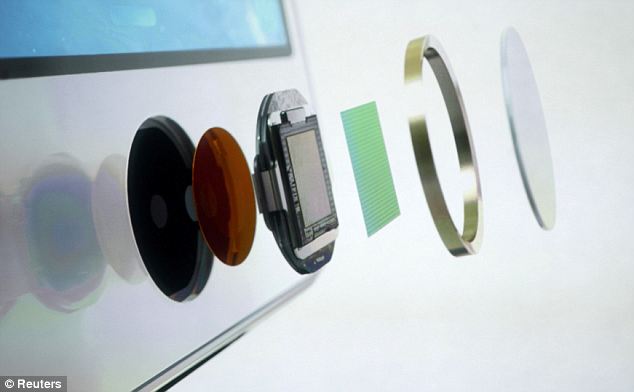
The firm already uses sapphire glass in the fingerprint scanner of its iPhone 5S, as well as to protect the camera lenses on its new devices.
More top stories
Irish authorities have revealed Eric Eoin Marques will not be prosecuted under their jurisdiction and may challenge an attempt by the U.S....


0 comments:
Post a Comment